Tourist tax in Santiago de Compostela: everything you need to know
If you have a holiday rental property or rural tourism accommodation, this measure directly affects you: from 1 October 2025, Santiago de Compostela applies a tax on tourist stays.
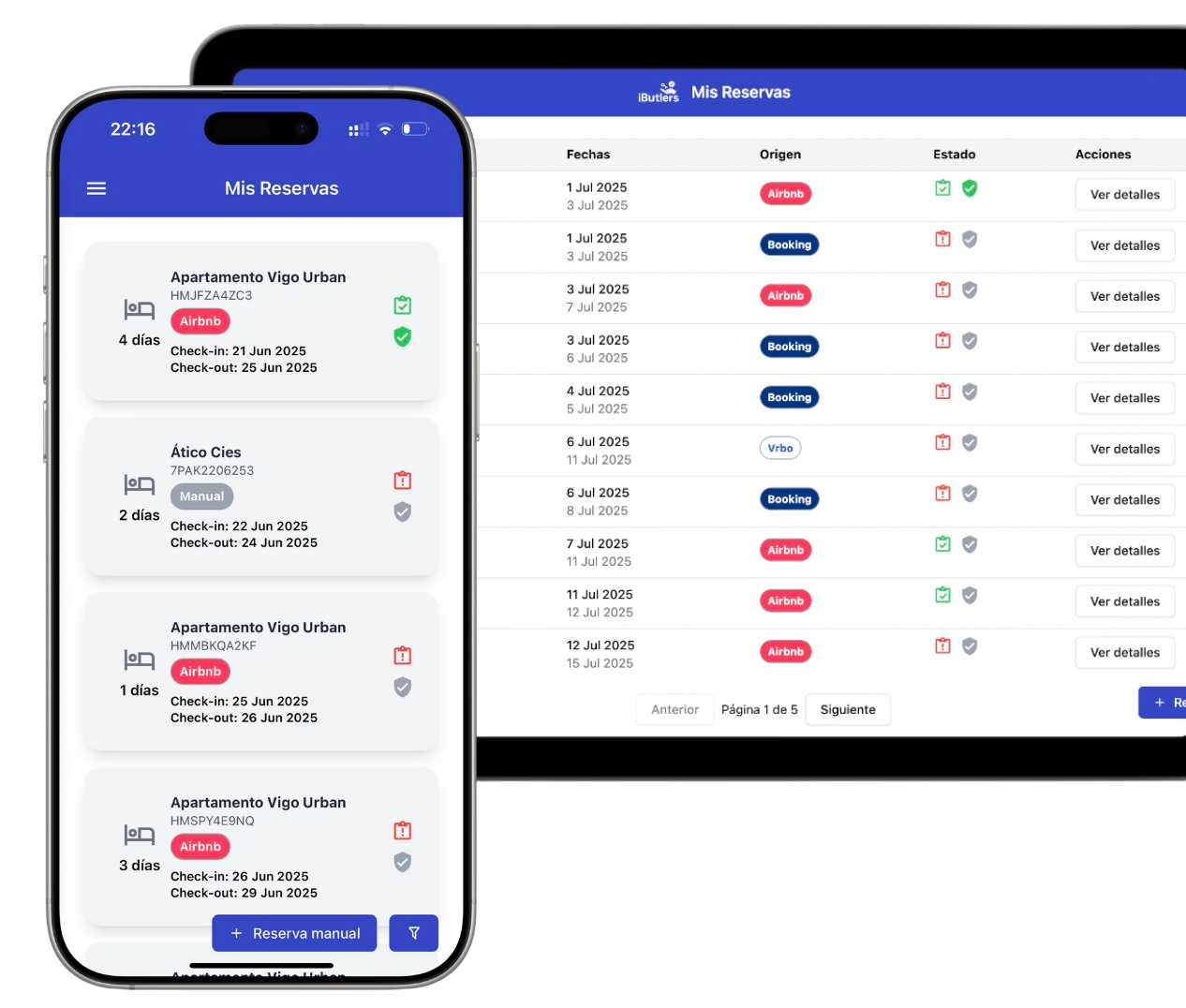
💡 Collect your tourist tax directly through the check-in form
With iButlers you can read about the tax collection process integrated into check-in.
Check the features available for your accommodation.
💶 How much is payable?
For non-exempt stays in Santiago de Compostela, the resulting amounts are €2 per person per day or part of a day in holiday rental properties and €1 in rural tourism accommodation, with a maximum of five days per stay.
How the total is calculated: article 16 of Law 5/2024 sets those regional tax amounts, but article 17 grants a 100% reduction. The Concello applies a municipal surcharge of 100% of the full regional tax amount before that reduction, under article 24.3 and article 7 of its ordinance.
- Holiday rental property: €0 regional tax after the reduction + €2 municipal surcharge = €2 in total per person per chargeable day.
- Rural tourism accommodation: €0 regional tax after the reduction + €1 municipal surcharge = €1 in total per person per chargeable day.
Therefore, no additional €2 or €1 regional charge is added to those totals. Information checked on 18 October 2026 against the following sources.
Law 5/2024: regional tax amounts, reduction and municipal surcharge
Santiago Tax Ordinance 1.32: final publication of 6 August 2025
Quick examples
- Couple in a holiday let, 3 nights: 2 € × 2 people × 3 nights = 12 €.
- Group of 4 in a rural holiday home, 6 nights: €1 × 4 × 5 nights (maximum) = 20 €.
🙅 Who does not have to pay?
Not all guests have to pay the tax. The ordinance sets out cases not subject to the tax and several exemptions:
- Stays for health reasons (patients and accompanying persons).
- Stays by athletes registered with a sports federation in official competitions.
- Stays for force majeure circumstances duly substantiated.
- Minors who are not legally emancipated.
- People with a disability rating of ≥65 %.
- Stays subsidised by social programmes of a public authority in any EU Member State.
To apply these exemptions and cases where the tax does not apply, documentary evidence of the relevant circumstances is essential.
From calculation to payment management
After checking the rate and exemptions applicable to the stay, you can read about iButlers tourist tax calculation and collection process. Check the configuration applicable to your accommodation; collecting payment from a guest and filing a return with the authorities are separate tasks.
How tourist tax calculation and collection works
📑 How do you administer it?
- As the owner or manager, you must collect the tax from the guest.
💡 Collect your tourist tax directly through the check-in form with iButlers.
- Afterwards, you will complete the online tax self-assessment with the Concello:
- From 1 to 20 July (for stays from January to June)
- From 1 to 20 January (for stays from July to December)
- 👉 Self-assessment here
💡 Organise registration with iButlers
Prepare guest registration and organise the collection and submission of guest data. Review the obligations and configuration for each accommodation.
- Checking guest data
- Automatic submission of reports to the Ministerio del Interior
- Reviewing access to guest data
✅ Visit our website or email contacto@ibutlers.com

📑 Official regulations (Santiago de Compostela)
You can consult the Tax ordinance no. 1.32 governing the municipal surcharge on Galicia's tourist accommodation tax in Santiago de Compostela.
📤 Remember: in Galicia you must send occupancy data to Turespazo
With iButlers you can automate data submission to TURESPAZO and comply without any hassle.